Other Ways to Say “Looking Forward to Seeing You” helps you express excitement naturally when communicating with friends, colleagues, and acquaintances. I often use the same old phrase, but this expression can become repetitive and lose its personal touch. Expanding my repertoire of anticipatory phrases helps me convey genuine excitement and make daily interactions more meaningful. Different wording can change the entire feel of a message and make it sound warm, natural, or personal.
Choosing the right expression depends on your relationship and situation. A professional meeting may require a polite expression, while a casual conversation with a friend can sound more excited and friendly. Matching your tone to the person you’re meeting makes your message feel genuine. This guide shares 15 natural alternatives, their meanings, usage, tone, and realistic examples to help you communicate clearly and make your messages more personal.
What Does “Looking Forward to Seeing You” Mean?
“Looking forward to seeing you” means that you feel positive about meeting someone in the future and are happy or excited about the upcoming meeting. It expresses pleasant anticipation without sounding overly emotional. The phrase can work when you’re talking to a friend, colleague, client, family member, or someone you’re dating, depending on the surrounding message and tone. For example, after arranging a meeting, you might write, “Thanks for confirming the appointment. I’m looking forward to seeing you.” The expression usually suggests that the future meeting is already expected or arranged rather than merely hoped for.
Common Situations Where “Looking Forward to Seeing You” Is Used
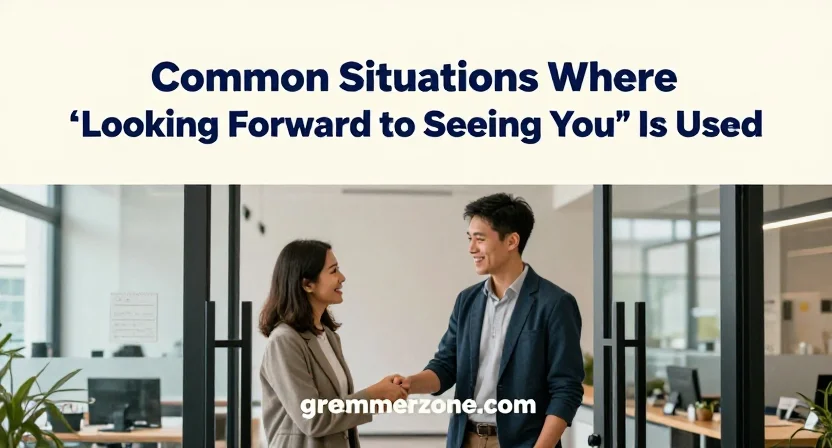
People commonly use “looking forward to seeing you” in personal messages, emails, invitations, workplace communication, and everyday conversation. You might send it to a friend before dinner, add it to an email before a business meeting, or use it when confirming plans with someone you haven’t seen recently.
The phrase is especially useful because it sits comfortably between friendly and professional language. However, you may want another expression when you need to sound more excited, more formal, more casual, or more emotionally personal. For instance, “Can’t wait to see you” sounds much more enthusiastic than the original, while “I’m looking forward to our meeting” feels more businesslike.
Is It Professional or Polite to Say “Looking Forward to Seeing You”?
Yes. “Looking forward to seeing you” is both polite and professional when the context calls for a friendly expression of anticipation. It’s common in emails, meeting confirmations, invitations, and professional correspondence. The wording feels warmer than a simple “See you then” without becoming excessively informal.
Its exact tone depends on the relationship. With a close friend, it can sound affectionate and sincere. With a colleague or client, it can communicate courtesy and positive anticipation. For highly formal correspondence, “I look forward to meeting with you” or “I look forward to our meeting” may sound more polished. The phrase itself isn’t unprofessional; it simply has a friendly warmth that may or may not suit every formal situation.
Advantages and Disadvantages of Saying “Looking Forward to Seeing You”
Advantages
The main advantage is its versatility. You can use the phrase in personal and professional settings without making the message sound too stiff. It also communicates positive anticipation clearly and politely. Another benefit is that it doesn’t exaggerate your emotions, so it works well when you want to sound genuinely pleased about an upcoming meeting without sounding overly enthusiastic.
Disadvantages
The phrase can become predictable or repetitive if you use it in every email or message. It also doesn’t tell the reader much about the strength of your feelings. If you’re genuinely excited to see someone, “I can’t wait to see you” may communicate more energy. In a formal business email, “I’m looking forward to our meeting” may also sound more focused and professional.
Complete List of 15 Alternatives
- I look forward to seeing you
- I’m looking forward to our meeting
- I’m excited to see you
- I can’t wait to see you
- It’ll be great to see you
- I’m eager to see you
- I’m looking forward to catching up
- I’m excited about our upcoming meeting
- I’m looking forward to spending time together
- I hope to see you soon
- See you soon
- I’m really looking forward to our time together
- I’m glad we’ll be seeing each other
- I’m looking forward to meeting you
- I’m pleased that we’ll be seeing each other
1. I Look Forward to Seeing You
Meaning
“I look forward to seeing you” expresses positive anticipation about a future meeting. It has almost the same basic meaning as “looking forward to seeing you,” but the complete “I look forward” construction often sounds slightly more polished.
Definition
A polite expression used to say that you anticipate seeing someone with pleasure.
Detailed Explanation
This is one of the closest alternatives to the original phrase. It works particularly well in professional emails, especially when you want to sound courteous without becoming overly formal. The expression can also work in personal communication, although it may sound slightly more polished than casual alternatives. It communicates confidence that the meeting will happen.
Scenario Examples
Scenario: You’re confirming a business appointment.
Example: “Thank you for confirming the appointment. I look forward to seeing you on Thursday.”
Scenario: You’re writing to someone you know personally.
Example: “It was great talking with you. I look forward to seeing you next weekend.”
Best Use
Best for professional emails, appointments, meetings, and polite personal messages.
Tone
Tone: Polite, warm, professional
It sounds positive without being overly enthusiastic.
2. I’m Looking Forward to Our Meeting
Meaning
“I’m looking forward to our meeting” expresses positive anticipation about a specific scheduled meeting.
Definition
A polite way to say that you are pleased about an upcoming meeting.
Detailed Explanation
This alternative focuses more on the meeting itself than on the person you will see. That makes it particularly useful at work. It sounds natural in emails with clients, coworkers, interviewers, and business partners. Because it emphasizes the event, it may feel slightly less personal than “looking forward to seeing you.”
Scenario Examples
Scenario: You have a client consultation tomorrow.
Example: “Thanks for sending the documents. I’m looking forward to our meeting tomorrow.”
Scenario: You’re confirming an interview.
Example: “I appreciate the opportunity and I’m looking forward to our meeting.”
Best Use
Best for work emails, interviews, consultations, appointments, and scheduled meetings.
Tone
Tone: Professional, courteous, positive
It keeps the focus on the upcoming event while maintaining warmth.
3. I’m Excited to See You
Meaning
“I’m excited to see you” expresses stronger enthusiasm about meeting someone.
Definition
A direct statement showing that you feel genuinely enthusiastic about seeing someone.
Detailed Explanation
This phrase is more energetic than “looking forward to seeing you.” It works especially well with friends, family members, partners, and people you know well. It can appear in professional communication when the relationship is friendly, but it may sound too enthusiastic for some formal situations. The word “excited” makes your emotional response more obvious.
Scenario Examples
Scenario: Your friend is visiting after several months.
Example: “You’re finally coming to town! I’m excited to see you.”
Scenario: You’re meeting a close relative.
Example: “The whole family is coming this weekend. I’m excited to see you.”
Best Use
Best for friends, family, partners, personal messages, and warm social communication.
Tone
Tone: Enthusiastic, warm, personal
It shows more emotional excitement than the original phrase.
4. I Can’t Wait to See You
Meaning
“I can’t wait to see you” means that you are very eager for the meeting to happen.
Definition
An informal expression showing strong excitement or impatience to see someone.
Detailed Explanation
This is a much more enthusiastic alternative. Despite the literal wording, it usually doesn’t mean that you are literally unable to wait. Instead, it emphasizes strong anticipation. The expression is natural among friends, family members, romantic partners, and close acquaintances. It generally isn’t the best choice for formal business correspondence.
Scenario Examples
Scenario: Your best friend is returning from a long trip.
Example: “Have a safe flight! I can’t wait to see you when you get back.”
Scenario: You’re sending a message to your partner.
Example: “Only two more days. I can’t wait to see you.”
Best Use
Best for casual texts, close relationships, romantic messages, and enthusiastic personal communication.
Tone
Tone: Excited, affectionate, informal
It carries considerably more emotional energy than the original.
5. It’ll Be Great to See You
Meaning
“It’ll be great to see you” expresses warm, positive feelings about an upcoming meeting.
Definition
A friendly expression meaning that seeing the person will be enjoyable or welcome.
Detailed Explanation
This wording feels relaxed and natural without being overly emotional. It can work with friends, relatives, coworkers, and acquaintances. Unlike “I can’t wait to see you,” it doesn’t suggest intense excitement. That balance makes it useful when you want to sound friendly and sincere without overdoing it.
Scenario Examples
Scenario: A former coworker is visiting your city.
Example: “Let me know when you arrive. It’ll be great to see you again.”
Scenario: You’re meeting a friend for lunch.
Example: “Friday at noon works perfectly. It’ll be great to see you.”
Best Use
Best for friendly conversations, casual emails, reunions, and social plans.
Tone
Tone: Friendly, relaxed, warm
It feels positive without sounding excessively enthusiastic
6. I’m Eager to See You
Meaning
“I’m eager to see you” means that you strongly want to see someone and are anticipating the meeting.
Definition
A somewhat formal expression showing strong interest or anticipation about seeing someone.
Detailed Explanation
“Eager” suggests a stronger sense of anticipation than “looking forward to.” It can sound polished in writing, although it is less common in casual conversation. Depending on the relationship, it may also sound slightly formal or emotionally intense. Use it when you want to emphasize enthusiasm with a more refined vocabulary choice.
Scenario Examples
Scenario: You’re writing to a family member you haven’t seen for years.
Example: “After all this time, I’m eager to see you again.”
Scenario: You’re writing a formal personal message.
Example: “Thank you for arranging the visit. I’m eager to see you next month.”
Best Use
Best for formal personal writing, thoughtful messages, and situations where strong anticipation is appropriate.
Tone
Tone: Warm, eager, slightly formal
The word “eager” gives the expression more intensity.
7. I’m Looking Forward to Catching Up
Meaning
“I’m looking forward to catching up” means that you’re happy about seeing someone and discussing what has happened in your lives since you last met.
Definition
A friendly expression showing anticipation about reconnecting and sharing updates.
Detailed Explanation
This alternative works best when you already know the person. It doesn’t simply mean that you want to see them; it suggests that you want to talk, reconnect, and hear what they’ve been doing. It’s especially natural when meeting an old friend, former coworker, or relative. Don’t use it when you’re meeting someone for the first time.
Scenario Examples
Scenario: You’re meeting an old friend after several years.
Example: “It’s been far too long. I’m looking forward to catching up.”
Scenario: You’re meeting a former coworker for coffee.
Example: “Thursday afternoon works for me. I’m looking forward to catching up.”
Best Use
Best for friends, former colleagues, relatives, reunions, and casual messages.
Tone
Tone: Friendly, familiar, conversational
It highlights reconnection, not simply the physical act of meeting.
8. I’m Excited About Our Upcoming Meeting
Meaning
“I’m excited about our upcoming meeting” expresses enthusiasm about a meeting that will happen soon.
Definition
A professional-friendly expression showing positive anticipation of a future meeting.
Detailed Explanation
This expression puts more emphasis on the meeting and its purpose than on seeing the other person. It can sound more energetic than “I’m looking forward to our meeting.” The wording is suitable for professional situations when you genuinely feel enthusiastic about the discussion. However, “excited” can be too strong for routine business correspondence.
Scenario Examples
Scenario: You’re preparing for a project planning session.
Example: “We have several ideas to discuss, and I’m excited about our upcoming meeting.”
Scenario: You’re meeting a potential business partner.
Example: “I’ve enjoyed learning about your company. I’m excited about our upcoming meeting.”
Best Use
Best for business emails, project discussions, professional meetings, and important appointments.
Tone
Tone: Professional, enthusiastic, positive
It combines workplace language with clear excitement.
9. I’m Looking Forward to Spending Time Together
Meaning
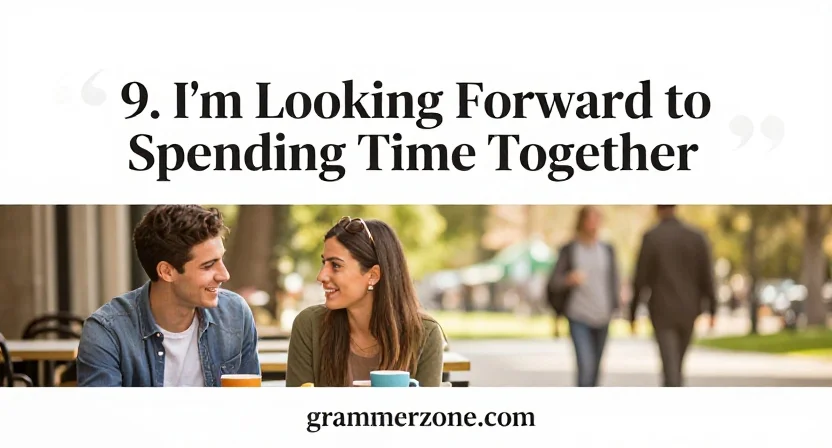
“I’m looking forward to spending time together” expresses anticipation about being with someone, rather than simply seeing them.
Definition
A warm expression showing that you anticipate enjoying shared time with another person.
Detailed Explanation
This phrase feels more personal than the original because “spending time together” suggests an activity or shared experience. It works especially well with close friends, family members, and romantic partners. It can also fit a heartfelt invitation or reunion. In professional settings, however, it may sound more personal than necessary.
Scenario Examples
Scenario: You’re planning a weekend with a close friend.
Example: “Everything is ready for Saturday. I’m looking forward to spending time together.”
Scenario: You’re writing to your partner before a vacation.
Example: “This trip has been a long time coming. I’m looking forward to spending time together.”
Best Use
Best for personal messages, relationships, family communication, vacations, and social plans.
Tone
Tone: Warm, personal, affectionate
It emphasizes the shared experience, not merely the meeting.
10. I Hope to See You Soon
Meaning
“I hope to see you soon” expresses a desire or hope that you will meet someone in the near future.
Definition
A polite expression communicating a wish for a future meeting without presenting it as certain.
Detailed Explanation
This phrase is softer than “looking forward to seeing you” because it doesn’t necessarily assume that plans have already been made. It is useful when you want to express interest in meeting again but don’t know exactly when that will happen. The word “hope” introduces a little uncertainty. That makes it different from expressions used for confirmed appointments.
Scenario Examples
Scenario: You’re ending a conversation with a neighbor.
Example: “It was lovely talking with you. I hope to see you soon.”
Scenario: You’re saying goodbye to a relative.
Example: “Take care, and I hope to see you soon.”
Best Use
Best for goodbyes, friendly messages, personal correspondence, and situations where future plans aren’t confirmed.
Tone
Tone: Warm, polite, gentle
It sounds less definite and slightly more tentative than the original.
11. See You Soon
Meaning
“See you soon” is a brief way to say that you expect to meet the person again in the near future.
Definition
A casual farewell expressing an expectation or intention to meet again shortly.
Detailed Explanation
This is much shorter and more conversational than “looking forward to seeing you.” It works best when the context already makes the future meeting clear. The expression doesn’t explicitly communicate excitement or anticipation, although it can still sound friendly. Because it’s concise, it is particularly natural in texts and casual conversations.
Scenario Examples
Scenario: You’re leaving a friend’s house.
Example: “Thanks for having me over. See you soon!”
Scenario: You’ve just finished a coffee meeting.
Example: “I’ll send you those notes tonight. See you soon.”
Best Use
Best for casual conversation, texting, quick messages, and informal goodbyes.
Tone
Tone: Casual, friendly, relaxed
It is simple and natural but carries less emotional detail.
12. I’m Really Looking Forward to Our Time Together
Meaning
“I’m really looking forward to our time together” expresses strong personal anticipation about spending time with someone.
Definition
A warm expression showing genuine excitement about a shared future experience.
Detailed Explanation
Adding “really” makes the anticipation stronger than the standard phrase. The wording also focuses on the quality of the time you will share rather than simply the act of meeting. It suits close relationships and meaningful occasions. In a routine workplace email, it may sound more personal than necessary.
Scenario Examples
Scenario: You’re planning a holiday with family.
Example: “The whole family will finally be together. I’m really looking forward to our time together.”
Scenario: You’re writing to a close friend before a weekend visit.
Example: “I’ve missed our long conversations. I’m really looking forward to our time together.”
Best Use
Best for family messages, close friendships, romantic relationships, and meaningful occasions.
Tone
Tone: Warm, heartfelt, affectionate
It conveys stronger personal feeling than the basic phrase.
13. I’m Glad We’ll Be Seeing Each Other
Meaning
“I’m glad we’ll be seeing each other” expresses happiness that a future meeting has been arranged.
Definition
A friendly expression showing pleasure about an upcoming meeting.
Detailed Explanation
This alternative focuses on your happiness about the fact that the meeting will happen. It can sound especially natural when you’ve gone a long time without seeing someone. The wording is less energetic than “I’m excited to see you” but warmer than a purely factual confirmation. It also works well when you want your message to sound sincere without becoming overly sentimental.
Scenario Examples
Scenario: You’re reconnecting with an old friend.
Example: “It’s been years since we last met. I’m glad we’ll be seeing each other.”
Scenario: You’re meeting a relative during a family event.
Example: “I’m glad the schedule worked out. I’m glad we’ll be seeing each other this weekend.”
Best Use
Best for reunions, personal messages, family communication, and friendly conversations.
Tone
Tone: Warm, sincere, conversational
It communicates happiness without sounding overly excited.
14. I’m Looking Forward to Meeting You
Meaning
“I’m looking forward to meeting you” expresses anticipation about meeting someone, usually for the first time.
Definition
A polite expression showing that you anticipate a first or new introduction with someone.
Detailed Explanation
This is an important contextual alternative because “meeting” often suggests that you haven’t met the person before. It is common in professional emails, interviews, appointments, introductions, and networking situations. If you already know someone well, “seeing you” or “catching up” may be more natural. Using “meeting you” for a close friend can subtly change the meaning.
Scenario Examples
Scenario: You have a job interview scheduled.
Example: “Thank you for arranging the interview. I’m looking forward to meeting you.”
Scenario: A new client is visiting your office.
Example: “We’re pleased to welcome you next week. I’m looking forward to meeting you.”
Best Use
Best for first meetings, interviews, networking, business introductions, and professional emails.
Tone
Tone: Professional, polite, welcoming
It is especially natural when the person is new to you.
15. I’m Pleased That We’ll Be Seeing Each Other
Meaning
“I’m pleased that we’ll be seeing each other” communicates polite satisfaction about an upcoming meeting.
Definition
A relatively formal expression showing that you are happy about an arranged future meeting.
Detailed Explanation
This wording is more formal and reserved than most alternatives on this list. It can work when you want to express warmth without sounding highly emotional. However, it may feel somewhat stiff in everyday conversation because native speakers often prefer simpler expressions such as “It’ll be great to see you.” Use it selectively when a formal or polished tone suits the relationship.
Scenario Examples
Scenario: You’re writing a formal personal letter.
Example: “Thank you for making the arrangements. I’m pleased that we’ll be seeing each other next month.”
Scenario: You’re corresponding with a professional contact you already know.
Example: “The conference schedule has been finalized. I’m pleased that we’ll be seeing each other there.”
Best Use
Best for formal correspondence, polished writing, and reserved professional communication.
Tone
Tone: Formal, respectful, reserved
It expresses positive anticipation without sounding highly emotional.
See also: 15 Other Ways to Say “Can’t Wait” (With Examples)
FAQs:
What is another way to say “Looking Forward to Seeing You”?
Natural alternatives include “I look forward to seeing you,” “It’ll be great to see you,” “I’m excited to see you,” and “I’m looking forward to our meeting.” The best choice depends on whether you want to sound professional, casual, enthusiastic, or personal.
What does “Looking Forward to Seeing You” mean?
“Looking forward to seeing you” means that you feel positive about a future meeting. It communicates pleasant anticipation and normally suggests that you expect to see the person.
Is “Looking Forward to Seeing You” professional?
Yes. “Looking forward to seeing you” is professional and polite in many workplace situations. For a more business-focused tone, you can say “I’m looking forward to our meeting” or “I look forward to meeting with you.”
What is a more polite way to say “Looking Forward to Seeing You”?
“I look forward to seeing you” is already polite. In a formal context, “I’m looking forward to our meeting” can sound polished and professional. For a warmer personal message, “It’ll be great to see you” may feel more natural.
Which alternative works best in formal communication?
“I look forward to seeing you” and “I’m looking forward to our meeting” are strong choices for formal or professional communication. If you’re meeting someone for the first time, “I’m looking forward to meeting you” is usually more precise.
Conclusion:
Choosing the right expression can make a simple message feel more thoughtful and appropriate. “Looking forward to seeing you” is already a natural, polite phrase, but it isn’t your only option. You can use “I can’t wait to see you” when you want more excitement, “I’m looking forward to our meeting” for professional communication, or “I’m looking forward to spending time together” for a more personal message. The key is to consider your relationship, the situation, and the emotion you want to communicate. Similar expressions can carry noticeably different levels of warmth, formality, and enthusiasm. Choose wording that sounds like you and fits the moment. The best alternative is the one that communicates your genuine anticipation clearly and naturally.






1 thought on “15 Other Ways to Say “Looking Forward to Seeing You” (With Examples)”