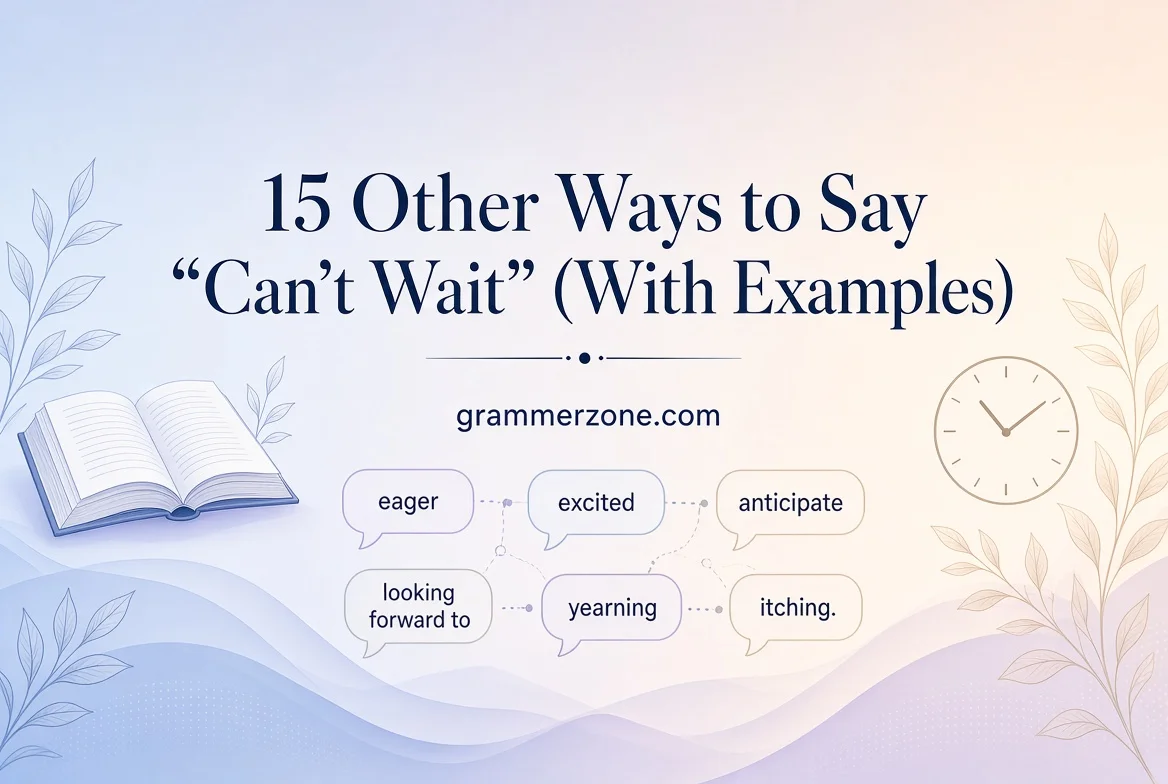
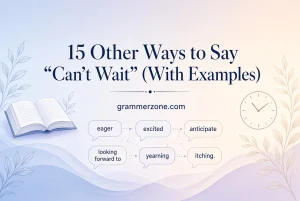
Other Ways to Say “Can’t Wait” helps you express excitement, anticipation, and eagerness without repeating the same phrase in everyday conversations or writing. English has numerous alternatives that make your messages more natural, clear, and expressive. Choosing the right words depends on your feelings, relationship, situation, and audience. For example, “I’m really looking forward to it” suits conversational English, while “I’m eager to get started” works well in professional messages. These fresh expressions also help you improve verbal communication, expand vocabulary, and use alternative phrases with creativity and precision.
Good communication depends on word choice, tone, context, and feelings. Some natural alternatives sound enthusiastic and casual, while others feel warmer, more professional, or more expressive in thoughtful personal conversations and professional communication. Matching an expression to the moment makes your message clearer and more genuine. You can show excitement and eager anticipation through different ways to express excitement and ways to express anticipation. These 15 useful alternatives provide practical examples and meanings that help you incorporate each expression naturally into written English and personal communication. Using everyday language, improving clarity, and avoiding repetition can strengthen your verbal expression and support writing improvement, vocabulary expansion, and confidence.
What Does “Can’t Wait” Mean?
“Can’t wait” means that you feel very excited or eager for something to happen. It suggests that you’re looking forward to a future event, experience, opportunity, or meeting and wish it could happen sooner. For example, “I can’t wait to see you” means you’re very excited about seeing that person. In everyday English, the phrase is usually positive, enthusiastic, and informal, although its exact tone depends on the context. It can describe excitement about a vacation, a new job, a birthday, a conversation, a movie, or almost any anticipated event.
The expression can also emphasize strong anticipation. When someone says, “I can’t wait for the weekend,” they aren’t literally saying that waiting is impossible. They’re expressing how much they’re looking forward to the weekend. Because of that, “can’t wait” is often emotional rather than literal.
Common Situations Where “Can’t Wait” Is Used
People commonly use “can’t wait” in everyday conversation, texting, social media posts, and personal messages. A friend might write, “Can’t wait to see you tomorrow!” A couple might use it when talking about an upcoming trip. Someone starting a new position could say, “I can’t wait to get started.”
The phrase also appears in workplace communication when the relationship is reasonably friendly. For example, “I can’t wait to hear your thoughts” can sound warm and enthusiastic after a colleague has reviewed a project. However, a more measured expression may work better in a highly formal email. Choosing an alternative can help you control the level of excitement, professionalism, and emotional warmth in your message.
Is It Professional or Polite to Say “Can’t Wait”?

“Can’t wait” is polite and friendly, but it is generally informal. It works naturally with friends, family members, romantic partners, classmates, and familiar coworkers. It can also work in customer communication when the brand or relationship has a warm, conversational style.
In formal business writing, however, phrases such as “I look forward to” or “I’m eager to” can sound more polished. The issue isn’t that “can’t wait” is rude. Rather, it carries noticeable enthusiasm and a conversational feel. A formal report, official letter, or serious business email may benefit from more restrained wording.
Advantages and Disadvantages of Saying “Can’t Wait”
Advantages
The biggest advantage of “can’t wait” is its emotional clarity. It immediately tells the other person that you’re excited, interested, or eager. The phrase is short, familiar, and easy to understand. It also creates a warm conversational tone without sounding overly complicated. In a text such as “Can’t wait to catch up!” it can communicate genuine enthusiasm in just a few words.
Disadvantages
The main limitation is formality. “Can’t wait” may sound too casual for certain professional or formal situations. It can also become repetitive if you use it for every upcoming event. In addition, the phrase doesn’t always communicate the exact kind of anticipation you feel. For example, “I’m counting down the days” emphasizes excitement about the passage of time, while “I’m eager to” focuses more on strong willingness or enthusiasm.
15 Synonyms and Alternatives for “Can’t Wait”
- I’m looking forward to it
- I’m eager to
- I’m excited to
- I’m thrilled about
- I’m counting down the days
- I’m keen to
- I’m dying to
- I’m itching to
- I’m anticipating
- I’m longing to
- I’m eager for
- I’m really excited about
- I’m so ready for
- I’m excited about what’s ahead
- I’m looking forward to what’s coming
1. I’m Looking Forward to It
Meaning
“I’m looking forward to it” means that you’re pleased and excited about something that will happen in the future. It is one of the most natural alternatives to “can’t wait.”
Definition
It means to feel positive anticipation about a future event or experience.
Detailed Explanation
This expression is usually more polished and restrained than “can’t wait.” It works particularly well when you want to show enthusiasm without sounding overly excited. It’s also useful in professional communication, especially when you’re responding to an upcoming meeting, event, or opportunity. Unlike “can’t wait,” it sounds comfortable in both casual and formal settings.
Scenario Examples
Scenario: A friend has invited you to dinner.
Example: “Thanks for the invitation. I’m looking forward to it!”
Scenario: You’re confirming a business meeting.
Example: “I’m looking forward to discussing the project with you.”
Scenario: You’re preparing for a family trip.
Example: “We’re all looking forward to it.”
Best Use
Best for emails, professional communication, personal messages, meetings, invitations, and everyday conversation.
Tone
Tone: Warm, polite, professional, positive
It communicates genuine anticipation without sounding overly informal.
2. I’m Eager to
Meaning
“I’m eager to” expresses strong interest and willingness to do something. It shows that you’re enthusiastic and ready to take action.
Definition
It means to be very interested in or enthusiastic about doing something.
Detailed Explanation
“I’m eager to” often sounds more purposeful than “can’t wait.” It works especially well when anticipation involves action, participation, learning, or achievement. For example, you can be eager to begin a project or eager to learn something new. The expression sounds more polished than many casual alternatives.
Scenario Examples
Scenario: You have accepted a new position.
Example: “I’m eager to contribute to the team.”
Scenario: You’re joining a training program.
Example: “I’m eager to learn more about the new system.”
Scenario: You’re preparing to meet a potential business partner.
Example: “We’re eager to explore this opportunity together.”
Best Use
Best for professional emails, workplace communication, academic settings, formal messages, and purposeful conversations.
Tone
Tone: Professional, enthusiastic, confident
It expresses excitement while maintaining a mature and composed tone.
3. I’m Excited to
Meaning
“I’m excited to” directly communicates that you feel happy and enthusiastic about doing something.
Definition
It means to feel strong positive emotion about an upcoming action or experience.
Detailed Explanation
This is one of the closest everyday alternatives to “can’t wait.” It sounds natural in both speech and writing and can fit many personal and professional situations. “I’m excited to” focuses on the activity itself rather than simply the passage of time before it happens. It can sound enthusiastic without becoming overly dramatic.
Scenario Examples
Scenario: You’re starting a new course.
Example: “I’m excited to start the course next week.”
Scenario: You’re introducing yourself to a new team.
Example: “I’m excited to work with everyone.”
Scenario: You’re talking to a friend about an upcoming concert.
Example: “I’m excited to see the band live!”
Best Use
Best for casual conversation, texts, social media, workplace messages, announcements, and personal communication.
Tone
Tone: Enthusiastic, friendly, upbeat
It has a clear sense of excitement while remaining natural and widely understood.
4. I’m Thrilled About
Meaning
“I’m thrilled about” expresses very strong happiness and excitement about something.
Definition
It means to feel extremely pleased or excited about a person, event, opportunity, or situation.
Detailed Explanation
“Thrilled” is generally stronger than “excited.” It works when you want your enthusiasm to be obvious. For example, receiving great news may leave you thrilled, while an ordinary upcoming appointment may only make you excited. The phrase can sound warm and expressive, although it may be too enthusiastic for restrained business writing.
Scenario Examples
Scenario: Your friend has announced an engagement.
Example: “I’m absolutely thrilled about your engagement!”
Scenario: You’ve received exciting career news.
Example: “I’m thrilled about the opportunity to join the team.”
Scenario: You’re discussing an upcoming celebration.
Example: “We’re thrilled about the wedding next month.”
Best Use
Best for celebrations, personal messages, announcements, congratulations, and enthusiastic professional communication.
Tone
Tone: Warm, joyful, enthusiastic
It signals a high level of positive emotion and genuine happiness.
5. I’m Counting Down the Days
Meaning
“I’m counting down the days” means you’re so excited about an upcoming event that you’re eagerly watching the time pass.
Definition
It means to eagerly anticipate a future event by looking forward to each passing day.
Detailed Explanation
This expression creates a vivid sense of anticipation. It suggests that the event is important enough for you to notice how close it is getting. Unlike “I’m eager to,” this phrase highlights the waiting period itself. It is especially natural for vacations, weddings, birthdays, concerts, holidays, graduations, and other memorable occasions.
Scenario Examples
Scenario: You’re planning a vacation.
Example: “I’m counting down the days until we leave for Italy.”
Scenario: Graduation is approaching.
Example: “We’re counting down the days until graduation.”
Scenario: Your favorite band is coming to town.
Example: “I’m counting down the days until the concert!”
Best Use
Best for exciting events, vacations, celebrations, social media posts, texts, and personal conversations.
Tone
Tone: Excited, playful, enthusiastic
It gives your message a lively sense of anticipation.
6. I’m Keen to
Meaning
“I’m keen to” means that you’re very willing, interested, or enthusiastic about doing something.
Definition
It means to be strongly interested in or willing to do something.
Detailed Explanation
“Keen to” is especially common in British and international English, while “eager to” is often more familiar to American readers. It can express enthusiasm without the emotional intensity of “I’m thrilled.” In professional contexts, it can sound confident and engaged. The phrase is particularly useful when you want to show that you’re ready to participate.
Scenario Examples
Scenario: A coworker suggests a new project.
Example: “I’m keen to help with the planning.”
Scenario: You’re discussing a possible collaboration.
Example: “We’re keen to explore the idea further.”
Scenario: A friend suggests a weekend hike.
Example: “I’m keen to give it a try.”
Best Use
Best for workplace communication, collaboration, casual conversation, and situations involving willingness or interest.
Tone
Tone: Positive, confident, willing
It sounds enthusiastic without being overly emotional.
7. I’m Dying to
Meaning
“I’m dying to” is an informal expression meaning that you really, really want to do or experience something.
Definition
It means to strongly desire or eagerly want something, usually in an exaggerated, nonliteral way.
Detailed Explanation
This phrase is much more dramatic and informal than “I’m eager to.” It doesn’t literally refer to death. Instead, it exaggerates your desire to emphasize how badly you want something. It works well with friends and family but can sound too casual or emotional in formal professional communication.
Scenario Examples
Scenario: Your friend has watched a new movie before you.
Example: “Don’t spoil it! I’m dying to watch it.”
Scenario: You’ve been waiting to visit a new restaurant.
Example: “I’m dying to try that new restaurant.”
Scenario: You haven’t seen your best friend for months.
Example: “I’m dying to catch up with you.”
Best Use
Best for texts, close friendships, casual conversation, social media, and enthusiastic personal messages.
Tone
Tone: Very casual, expressive, excited
It adds emotional intensity and a playful exaggeration.
8. I’m Itching to
Meaning
“I’m itching to” means that you feel a strong, almost restless desire to do something.
Definition
It means to feel very eager or impatient to take an action.
Detailed Explanation
This idiom gives the impression that you’re having trouble sitting still because you’re so ready to act. It’s more colorful and informal than “I’m eager to.” The expression often suggests restlessness and impatience, not simply happiness. That makes it a good choice when you’re excited to get started rather than merely looking forward to an event.
Scenario Examples
Scenario: You’ve bought a new camera.
Example: “I’m itching to take it out and test it.”
Scenario: You have a new creative idea.
Example: “I’m itching to get started on the project.”
Scenario: You’ve been waiting to play a new video game.
Example: “I’m itching to try the new game tonight.”
Best Use
Best for casual conversations, creative discussions, hobbies, gaming, projects, and personal messages.
Tone
Tone: Informal, energetic, restless
It suggests strong eagerness with a lively, conversational feel.
9. I’m Anticipating
Meaning
“I’m anticipating” means that you’re expecting something and thinking about its arrival or occurrence.
Definition
It means to expect or look ahead to something that is likely to happen.
Detailed Explanation
This expression is more measured and formal than “can’t wait.” It doesn’t always communicate intense excitement, so context matters. You might anticipate a meeting, result, change, event, or challenge without feeling thrilled about it. When used positively, it can communicate thoughtful expectation rather than emotional excitement.
Scenario Examples
Scenario: A company is preparing for a major event.
Example: “We’re anticipating a busy week ahead.”
Scenario: You’re waiting for an important decision.
Example: “I’m anticipating the committee’s response.”
Scenario: You’re preparing for an upcoming change.
Example: “I’m anticipating some interesting developments.”
Best Use
Best for professional writing, formal communication, reports, planning, academic contexts, and thoughtful discussion.
Tone
Tone: Formal, measured, thoughtful
It sounds more restrained and analytical than “can’t wait.”
10. I’m Longing to
Meaning
“I’m longing to” expresses a deep and persistent desire to do something or experience something.
Definition
It means to have a strong emotional desire for something that is currently distant or unavailable.
Detailed Explanation
“Longing” is more emotional than ordinary excitement. It often suggests that you’ve been separated from something or someone and deeply want to experience it again. Because of this emotional depth, it isn’t always interchangeable with “can’t wait.” It works particularly well when the desire involves people, places, experiences, or emotional connection.
Scenario Examples
Scenario: You’ve been away from home for a long time.
Example: “I’m longing to see my family again.”
Scenario: You miss a place you once lived.
Example: “I’m longing to return to the countryside.”
Scenario: Someone is looking forward to reconnecting with a loved one.
Example: “She’s longing to spend time with her children.”
Best Use
Best for personal messages, emotional writing, relationships, reflective conversations, and creative writing.
Tone
Tone: Emotional, heartfelt, intimate
It communicates deeper desire rather than simple excitement.
11. I’m Eager for
Meaning
“I’m eager for” means that you’re strongly looking forward to something or want it to happen soon.
Definition
It means to feel strong enthusiasm or desire for an upcoming event, opportunity, or experience.
Detailed Explanation
“I’m eager for” is useful when the thing you anticipate is expressed as a noun or noun phrase. For example, you can be eager for the weekend, eager for a response, or eager for a new opportunity. It has a slightly more polished sound than “can’t wait.” The phrase can work in professional communication when the context calls for enthusiasm without excessive informality.
Scenario Examples
Scenario: You’re ready for a break.
Example: “I’m eager for the weekend to arrive.”
Scenario: You’re expecting feedback.
Example: “I’m eager for your feedback on the proposal.”
Scenario: You’re waiting for a new opportunity.
Example: “She’s eager for the chance to prove herself.”
Best Use
Best for professional messages, personal conversations, emails, opportunities, and future events.
Tone
Tone: Positive, polished, eager
It communicates anticipation while sounding relatively composed.
12. I’m Really Excited About
Meaning
“I’m really excited about” shows that you feel strong enthusiasm for a person, event, idea, opportunity, or experience.
Definition
It means to feel very happy and enthusiastic about something that is happening or will happen.
Detailed Explanation
This expression is especially flexible because it can refer to ideas and situations, not only future actions. You might be excited about a trip, a new project, a career change, or someone’s achievement. Adding “really” increases the emotional intensity. It is more conversational than “I’m anticipating” and less dramatic than “I’m dying to.”
Scenario Examples
Scenario: You’re starting a new project at work.
Example: “I’m really excited about this project.”
Scenario: You’re planning a family vacation.
Example: “We’re really excited about the trip.”
Scenario: You’ve discovered a new hobby.
Example: “I’m really excited about learning photography.”
Best Use
Best for casual conversation, workplace communication, social media, personal messages, announcements, and discussions about ideas.
Tone
Tone: Friendly, enthusiastic, conversational
It feels natural when you want to show genuine excitement without sounding exaggerated.
13. I’m So Ready for
Meaning
“I’m so ready for” means that you feel prepared, willing, and excited about something that is about to happen.
Definition
It means to feel very prepared or eager for an upcoming experience or event.
Detailed Explanation
This phrase differs slightly from “can’t wait” because it emphasizes readiness as well as anticipation. Someone might say, “I’m so ready for vacation” because they’re excited and also mentally prepared to take a break. It’s highly conversational and often appears in spoken English and social media. It may not suit formal business writing.
Scenario Examples
Scenario: You’ve had a demanding workweek.
Example: “I’m so ready for the weekend.”
Scenario: You’re preparing for a vacation.
Example: “I’m so ready for some time by the beach.”
Scenario: You’re about to begin a new chapter.
Example: “I’m so ready for this next chapter.”
Best Use
Best for texts, social media, casual conversation, personal messages, and informal announcements.
Tone
Tone: Casual, upbeat, energetic
It sounds enthusiastic and often carries a sense of relief or readiness.
14. I’m Excited About What’s Ahead
Meaning
“I’m excited about what’s ahead” expresses enthusiasm about future possibilities, experiences, or changes.
Definition
It means to feel positive and enthusiastic about the future and what it may bring.
Detailed Explanation
This expression is broader than “can’t wait” because it doesn’t focus on one specific event. It works when you’re entering a new stage, opportunity, project, or period of life and feel optimistic about it. The wording can sound thoughtful and mature. It is especially useful when you want to express enthusiasm without naming every specific thing you’re anticipating.
Scenario Examples
Scenario: You’ve started a new job.
Example: “I’m excited about what’s ahead in this new role.”
Scenario: You’re discussing a new business project.
Example: “We’re excited about what’s ahead for the company.”
Scenario: You’re beginning a new personal chapter.
Example: “I’m excited about what’s ahead and ready for the changes.”
Best Use
Best for professional announcements, personal reflections, social media posts, career updates, and conversations about the future.
Tone
Tone: Optimistic, confident, thoughtful
It communicates enthusiasm while keeping the focus on future possibilities.
15. I’m Looking Forward to What’s Coming
Meaning
“I’m looking forward to what’s coming” means that you feel positive anticipation about future events or developments.
Definition
It means to feel pleased and hopeful about things that are expected to happen in the future.
Detailed Explanation
This expression combines the warmth of “looking forward to” with a broader reference to the future. It’s useful when you don’t want to identify one specific event. The phrase sounds more composed than “can’t wait” while still communicating genuine enthusiasm. It can work particularly well when discussing a new phase, upcoming plans, or future opportunities.
Scenario Examples
Scenario: A team has several projects planned.
Example: “We’re looking forward to what’s coming next.”
Scenario: You’re entering a new stage in your career.
Example: “I’m looking forward to what’s coming in this new role.”
Scenario: You’re talking about future family plans.
Example: “We’re excited and looking forward to what’s coming.”
Best Use
Best for professional communication, personal reflections, announcements, emails, and conversations about future plans.
Tone
Tone: Warm, optimistic, polished
It conveys anticipation without the highly casual feel of “can’t wait.”
See also: 15 Other Ways to Say “Bro” (With Examples)
FAQs:
What is another way to say “Can’t Wait”?
Common alternatives include “I’m looking forward to it,” “I’m eager to,” “I’m excited to,” “I’m thrilled about,” and “I’m counting down the days.” The best choice depends on the context and how much excitement you want to express.
What does “Can’t Wait” mean?
“Can’t wait” means that you’re very excited or eager for something to happen. It’s normally an informal expression of positive anticipation. For example, “I can’t wait to see you” shows that you’re very excited about meeting someone.
Is “Can’t Wait” professional?
“Can’t wait” can be professional in friendly workplace communication, but it is generally informal. For formal emails, “I’m looking forward to it” or “I’m eager to” may sound more polished. Always consider your relationship with the recipient and the overall tone of the message.
What is a more polite way to say “Can’t Wait”?
“I’m looking forward to it” is one of the safest polite alternatives. It expresses enthusiasm without sounding overly casual. It works particularly well in emails, invitations, meetings, and professional conversations.
Which alternative works best in formal communication?
“I’m looking forward to it” and “I’m eager to” are strong choices for formal or professional communication. “I’m looking forward to it” sounds warm and courteous, while “I’m eager to” can emphasize enthusiasm and willingness to act.
Conclusion:
Choosing an alternative to “Can’t Wait” lets you express anticipation with greater precision. You might use “I’m looking forward to it” when you want to sound polite and professional, or “I’m dying to” when talking casually with a close friend. Expressions such as “I’m thrilled about,” “I’m counting down the days,” and “I’m longing to” add different levels of emotional intensity.The best wording depends on your relationship with the reader, the situation, and the feeling you want to communicate. You don’t always need the most enthusiastic phrase. Sometimes a calm expression carries more warmth and sincerity. Choose the words that sound natural for the moment, and your message will feel more genuine.






1 thought on “15 Other Ways to Say “Can’t Wait” (With Examples)”