
Have a Nice Day is a common parting phrase in English, used as a simple goodbye when leaving a store or ending a conversation. It can sound friendly, polite, or warm, based on the context, tone, and feeling behind the wording. Speakers may rattle off this phrase as a habitual response, yet it still carries a positive expression of wanting to wish someone well at the end of a social exchange. In spoken English and everyday English, this parting phrase remains useful for many forms of interaction.
In customer service, a customer service agent may use the phrase while chatting with a coworker, friend, or closest friend. From my experience, small changes in an expression can make a goodbye feel more personal, professional, or casual instead of forced. Choosing the right expression helps you add thought to a goodbye and select natural alternatives or alternative expressions that fit each situation. The same principle applies to written communication, including emails, text messages, and other texts.
Everyday communication, email communication, customer service communication, and spoken communication rely on tone, meaning, definition, and situations. The 15 natural alternatives offer different meanings, definitions, and tones, supported by realistic examples from conversations and everyday situations. A friendly expression, polite expression, warm expression, personal expression, professional expression, or casual expression can suit different needs. A thoughtful message with natural wording can make your communication feel more genuine and give your farewell a more fitting expression.
What Does “Have a Nice Day” Mean?
“Have a nice day” is a polite expression used to wish someone a pleasant and enjoyable day. People commonly say it when ending a conversation, leaving a workplace, finishing a customer interaction, or saying goodbye to someone. The word “nice” gives the phrase a friendly but fairly general tone. It doesn’t suggest a particular kind of happiness, so it works in many ordinary situations. Depending on your relationship with the person, “have a nice day” can sound polite, friendly, warm, or slightly formal. It usually communicates goodwill rather than deep emotion.
Common Situations Where “Have a Nice Day” Is Used
People use “have a nice day” in everyday conversations, text messages, emails, customer interactions, and casual workplace communication. A cashier might say it after completing a purchase. A coworker might use it when leaving the office. You could also send it to a friend after a short conversation or add it to the end of a polite message.
The phrase is especially useful because it’s simple and broadly appropriate. However, its general wording can sometimes feel routine. If you’re speaking to someone you know well, you may want something warmer, such as “Have a lovely day.” In a quick casual exchange, “Have a good one” may sound more natural. Choosing an alternative lets you match your wording to the relationship, setting, and mood.
Is It Professional or Polite to Say “Have a Nice Day”?
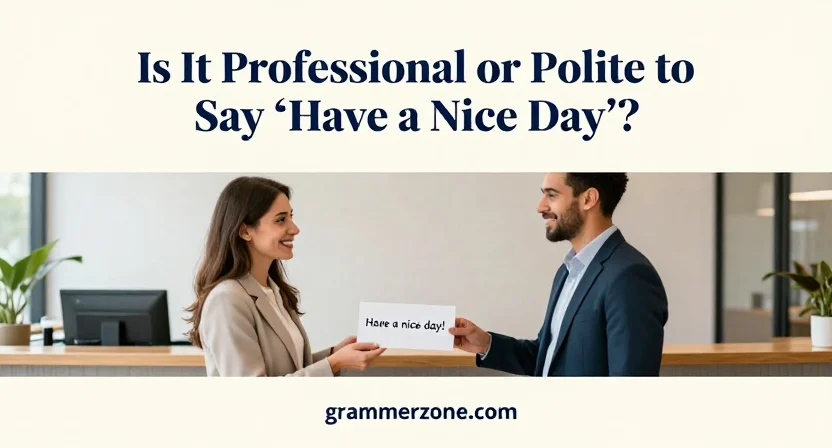
Yes. “Have a nice day” is polite and generally professional, especially in customer service, workplace conversations, emails, and everyday interactions. It isn’t overly formal, though, so it feels more approachable than highly formal closing expressions. For example, a customer service representative can naturally say, “Thank you for your patience. Have a nice day.”
Its suitability still depends on context. In a close personal relationship, the phrase may sound a little routine if you’re trying to express genuine affection. A warmer option such as “Have a wonderful day” or “Have a lovely day” may feel more personal. In very formal written communication, a conventional closing such as “Best regards” may be more appropriate than a daytime farewell.
Advantages and Disadvantages of Saying “Have a Nice Day”
Advantages
The biggest advantage of “have a nice day” is its versatility. It’s polite, positive, easy to understand, and suitable for most everyday situations. You don’t need a close relationship with someone to use it. It also avoids sounding overly emotional or familiar, which makes it useful in professional and customer-facing communication.
Disadvantages
The phrase can sometimes feel generic or routine, particularly when used repeatedly. It also doesn’t communicate much emotional detail. If you want to sound especially warm, enthusiastic, affectionate, or personal, another expression may communicate your intention better. The best alternative depends on whether you want to emphasize kindness, enthusiasm, warmth, professionalism, or casual friendliness.
15 Synonyms for “Have a Nice Day”
- Have a Great Day
- Have a Wonderful Day
- Have a Lovely Day
- Enjoy Your Day
- Have a Good One
- Take Care
- Hope You Have a Great Day
- Wishing You a Pleasant Day
- Have a Fantastic Day
- Enjoy the Rest of Your Day
- Have a Good Day
- Wishing You a Good Day
- Make the Most of Your Day
- Have a Wonderful Rest of Your Day
- Take Care and Enjoy Your Day
1. Have a Great Day
Meaning
“Have a great day” wishes someone a day that is enjoyable, positive, or successful. It is a slightly more enthusiastic alternative to “have a nice day.”
Definition
A friendly expression used when wishing someone an especially good or enjoyable day.
Detailed Explanation
“Have a great day” is one of the most natural alternatives because it sounds familiar without being overly casual. The word “great” adds more enthusiasm than “nice.” You can use it with friends, coworkers, customers, classmates, or acquaintances. It works particularly well when you want your farewell to sound positive but still completely ordinary.
Scenario Examples
Scenario: You’re leaving work after talking with a coworker.
Example: “Thanks for helping me with that report. Have a great day!”
Scenario: You’re ending a friendly text conversation.
Example: “I’ll let you get back to your plans. Have a great day!”
Scenario: A customer has finished asking for help.
Example: “Everything is sorted now. Have a great day!”
Best Use
Best for everyday conversations, workplace communication, customer service, emails, and friendly messages.
Tone
Tone: Friendly, positive, versatile
It sounds a little more enthusiastic than “have a nice day” while remaining natural in almost any ordinary situation.
2. Have a Wonderful Day
Meaning
“Have a wonderful day” expresses a warmer and more enthusiastic wish for someone to enjoy their day.
Definition
A friendly expression wishing someone an especially pleasant, happy, or memorable day.
Detailed Explanation
“Wonderful” carries more emotional warmth than “nice” or “good.” It can sound genuinely caring without becoming overly personal. This makes it useful when you want to add a little extra kindness to a farewell. It works particularly well when someone has something enjoyable planned or when you want your message to feel more heartfelt.
Scenario Examples
Scenario: Your friend is heading out for a special event.
Example: “I hope you have an amazing time at the concert. Have a wonderful day!”
Scenario: You’re ending a kind message to a family member.
Example: “Enjoy your afternoon with everyone. Have a wonderful day!”
Best Use
Best for friendly conversations, personal messages, family communication, and warm professional interactions.
Tone
Tone: Warm, cheerful, caring
The word “wonderful” makes the expression feel more heartfelt than the standard phrase.
3. Have a Lovely Day
Meaning
“Have a lovely day” is a warm way to wish someone a pleasant and enjoyable day.
Definition
A friendly farewell expressing a wish for someone to have a pleasant, enjoyable, or charming day.
Detailed Explanation
“Have a lovely day” often sounds softer and warmer than “have a nice day.” The word “lovely” adds a gentle emotional quality that can work especially well in personal conversations. It’s also common in polite everyday speech and customer-facing situations. Although the phrase is informal enough for conversation, it can still sound polished.
Scenario Examples
Scenario: You’re saying goodbye to a friend after coffee.
Example: “It was great catching up. Have a lovely day!”
Scenario: You’re ending a polite customer message.
Example: “Thank you for getting in touch. Have a lovely day.”
Best Use
Best for friendly messages, everyday conversations, customer communication, and polite emails.
Tone
Tone: Warm, gentle, polite
It has a softer and more personable feeling than “have a good day.”
4. Enjoy Your Day
Meaning
“Enjoy your day” tells someone to make the most of their day and have a pleasant experience.
Definition
A direct expression encouraging someone to enjoy the time ahead.
Detailed Explanation
Unlike “have a nice day,” “enjoy your day” focuses more directly on enjoyment. It works especially well when the person has plans, free time, a trip, an event, or something they’re looking forward to. It can also sound natural when you know how someone intends to spend the day. However, it may feel slightly less neutral than the standard phrase because it directly encourages enjoyment.
Scenario Examples
Scenario: Your friend is spending the afternoon at the beach.
Example: “Looks like the weather is perfect. Enjoy your day!”
Scenario: A coworker is taking the afternoon off.
Example: “You’ve earned the break. Enjoy your day!”
Best Use
Best for personal conversations, casual texts, vacations, outings, and situations involving specific plans.
Tone
Tone: Friendly, encouraging, relaxed
It feels natural when you know the person has something enjoyable planned.
5. Have a Good One
Meaning
“Have a good one” is a casual expression meaning “have a good day” or, more generally, “have a good time.”
Definition
An informal farewell used to wish someone a positive experience or a good day.
Detailed Explanation
This phrase is more casual than “have a nice day.” It’s common in spoken English and relaxed messages, especially between acquaintances, friends, coworkers, or people having a brief interaction. The word “one” refers to the relevant period, usually the day. Because it’s informal, it may not be the best choice for highly formal correspondence.
Scenario Examples
Scenario: You’re leaving a casual conversation with a coworker.
Example: “I’m heading out now. Have a good one!”
Scenario: You finish a quick conversation with someone at a store.
Example: “Thanks for your help. Have a good one!”
Best Use
Best for casual conversation, texting, relaxed workplaces, and everyday interactions.
Tone
Tone: Casual, friendly, easygoing
It sounds relaxed and conversational rather than polished or formal.
6. Take Care
Meaning
“Take care” is a friendly farewell that expresses concern for someone’s well-being.
Definition
A common goodbye used to wish someone well and encourage them to look after themselves.
Detailed Explanation
“Take care” is not an exact synonym for “have a nice day” because its focus is slightly different. Instead of specifically wishing someone a pleasant day, it expresses goodwill and concern. It can therefore feel more personal, especially when saying goodbye to someone you know. In some contexts, it can also suggest a longer or more meaningful farewell.
Scenario Examples
Scenario: Your friend is leaving after visiting you.
Example: “Thanks for stopping by. Take care!”
Scenario: You’re ending a personal text conversation.
Example: “I’ll talk to you tomorrow. Take care.”
Best Use
Best for friends, family, personal messages, and relaxed conversations.
Tone
Tone: Warm, caring, personal
It communicates concern for the person rather than simply wishing them a pleasant day.
7. Hope You Have a Great Day
Meaning
“Hope you have a great day” expresses a warm personal wish that someone’s day goes well.
Definition
A friendly expression showing that you hope someone enjoys or has a positive day.
Detailed Explanation
Adding “hope” makes this expression sound slightly more personal than a direct command such as “have a great day.” It presents the sentiment as a genuine wish rather than a standard farewell. This makes it especially natural in texts and friendly messages. It can also work in professional communication when the overall message has a warm tone.
Scenario Examples
Scenario: You’re ending a supportive message to a friend.
Example: “Good luck with your presentation. Hope you have a great day!”
Scenario: You’re replying to a colleague after answering their question.
Example: “I’ve attached the updated file. Hope you have a great day.”
Best Use
Best for texts, emails, friendly workplace communication, and supportive personal messages.
Tone
Tone: Warm, thoughtful, friendly
The word “hope” gives the expression a more personal and considerate quality.
8. Wishing You a Pleasant Day
Meaning
“Wishing you a pleasant day” is a polite and somewhat formal way to express good wishes for someone’s day.
Definition
A courteous expression wishing someone a pleasant and comfortable day.
Detailed Explanation
This expression is more formal than “have a nice day.” It works well when you want to sound courteous and polished without becoming excessively formal. “Pleasant” is neutral and restrained, so it doesn’t carry the emotional enthusiasm of “wonderful” or “fantastic.” That makes it useful in professional or customer-facing settings.
Scenario Examples
Scenario: You’re closing a formal customer email.
Example: “Thank you for contacting our support team. Wishing you a pleasant day.”
Scenario: You’re writing a polite business message.
Example: “We appreciate your time and consideration. Wishing you a pleasant day.”
Best Use
Best for professional communication, customer service, formal emails, and polite written messages.
Tone
Tone: Polite, professional, courteous
Its measured wording makes it more suitable for formal settings than highly casual alternatives.
9. Have a Fantastic Day
Meaning
“Have a fantastic day” wishes someone an exceptionally enjoyable or exciting day.
Definition
An enthusiastic expression wishing someone an excellent and highly enjoyable day.
Detailed Explanation
“Fantastic” is stronger and more energetic than “nice.” It’s a good choice when you want your farewell to feel upbeat and enthusiastic. The expression fits naturally when someone has exciting plans or when the overall conversation has a cheerful mood. It may sound too enthusiastic in situations requiring a restrained or highly formal tone.
Scenario Examples
Scenario: Your friend is heading to a birthday celebration.
Example: “Have fun tonight. Have a fantastic day!”
Scenario: You’re encouraging someone before an exciting event.
Example: “You’ve worked hard for this. Have a fantastic day!”
Best Use
Best for friends, celebrations, enthusiastic messages, and cheerful conversations.
Tone
Tone: Energetic, cheerful, enthusiastic
It adds noticeable excitement to the basic idea of wishing someone a good day.
10. Enjoy the Rest of Your Day
Meaning
“Enjoy the rest of your day” wishes someone a pleasant remainder of the day.
Definition
A farewell used when part of the day has already passed, encouraging someone to enjoy the time remaining.
Detailed Explanation
This expression is particularly useful when you’re speaking to someone later in the day. It sounds more specific than “have a nice day” because it recognizes that the person has already spent part of their day. It’s common in customer service, workplace communication, and everyday conversations. The phrase feels natural and polite without sounding overly formal.
Scenario Examples
Scenario: You finish a customer support conversation in the afternoon.
Example: “Your issue has been resolved. Thanks for your patience, and enjoy the rest of your day.”
Scenario: You’re leaving work at 3 p.m.
Example: “I’m heading home now. Enjoy the rest of your day!”
Best Use
Best for afternoon conversations, customer service, workplaces, emails, and everyday communication.
Tone
Tone: Polite, friendly, considerate
It feels especially natural because it matches the time of day.
11. Have a Good Day
Meaning
“Have a good day” is a straightforward expression wishing someone a pleasant day.
Definition
A common farewell expressing a simple wish for someone to have a good and positive day.
Detailed Explanation
“Have a good day” is extremely close in meaning to “have a nice day.” The word “good” is slightly more direct and neutral than “nice.” It can sound natural in both casual and professional settings. Because it’s so common, it’s a dependable choice when you want something simple without adding extra emotion.
Scenario Examples
Scenario: You’re ending a short conversation with a neighbor.
Example: “Thanks for letting me know. Have a good day!”
Scenario: A receptionist is saying goodbye to a visitor.
Example: “Your appointment is confirmed. Have a good day.”
Best Use
Best for everyday conversation, workplaces, customer service, and polite interactions.
Tone
Tone: Neutral, polite, friendly
It is simple and versatile without sounding especially emotional.
12. Wishing You a Good Day
Meaning
“Wishing you a good day” expresses a polite hope that someone’s day will be positive.
Definition
A courteous expression conveying good wishes for someone’s day.
Detailed Explanation
This wording feels slightly more deliberate than “have a good day.” The phrase “wishing you” gives it a gentle written quality, making it useful in emails, cards, and thoughtful messages. It’s still easy to understand and doesn’t sound excessively formal. Compared with “have a nice day,” it can feel a little more intentional.
Scenario Examples
Scenario: You’re closing a polite email.
Example: “Thank you for taking the time to speak with me. Wishing you a good day.”
Scenario: You’re sending a brief message to someone you recently met.
Example: “It was nice talking with you. Wishing you a good day!”
Best Use
Best for emails, polite messages, professional communication, and thoughtful written notes.
Tone
Tone: Polite, thoughtful, moderately formal
The wording gives a simple good wish a slightly more polished feel.
13. Make the Most of Your Day
Meaning
“Make the most of your day” encourages someone to use their time well and enjoy the opportunities available to them.
Definition
An encouraging expression telling someone to get the most value, enjoyment, or experience from their day.
Detailed Explanation
This phrase goes beyond simply wishing someone a pleasant day. It carries an element of encouragement and motivation. You might use it when someone has important plans, a busy schedule, or a chance to do something meaningful. Because it can sound motivational, it isn’t always interchangeable with the relaxed “have a nice day.”
Scenario Examples
Scenario: Your friend has a busy day ahead.
Example: “You’ve got a lot planned, so make the most of your day!”
Scenario: Someone is visiting a new city.
Example: “Enjoy exploring the city and make the most of your day.”
Best Use
Best for motivational messages, travel conversations, personal encouragement, and situations involving plans or opportunities.
Tone
Tone: Encouraging, positive, motivational
It focuses on making the day meaningful rather than simply pleasant.
14. Have a Wonderful Rest of Your Day

Meaning
“Have a wonderful rest of your day” wishes someone an especially pleasant remainder of the day.
Definition
A warm farewell expressing hope that someone enjoys the remaining part of their day.
Detailed Explanation
This expression combines the warmth of “have a wonderful day” with the time-specific meaning of “enjoy the rest of your day.” It sounds particularly natural after a conversation that happens during the afternoon or evening. The word “wonderful” makes it more enthusiastic than a neutral professional farewell. It works well when you want to be warm without sounding overly familiar.
Scenario Examples
Scenario: A customer service representative has finished helping a customer.
Example: “I’m glad we could resolve that for you. Have a wonderful rest of your day!”
Scenario: You’re leaving the office after a midday meeting.
Example: “Thanks, everyone. Have a wonderful rest of your day.”
Best Use
Best for customer communication, workplaces, polite conversations, and afternoon messages.
Tone
Tone: Warm, professional, cheerful
It combines professional courtesy with a little extra warmth.
15. Take Care and Enjoy Your Day
Meaning
“Take care and enjoy your day” combines a caring farewell with a direct wish for a pleasant day.
Definition
A friendly expression encouraging someone to look after themselves and enjoy their day.
Detailed Explanation
This phrase is warmer and more personal than “have a nice day.” It contains two ideas: well-being and enjoyment. That combination makes it especially useful when you know the person reasonably well or want your farewell to feel thoughtful. It can sound too personal for some highly formal situations, but it works naturally in everyday communication.
Scenario Examples
Scenario: You’re saying goodbye to a friend after spending the morning together.
Example: “I’ll call you later. Take care and enjoy your day!”
Scenario: You’re ending a friendly message to a family member.
Example: “Hope everything goes smoothly today. Take care and enjoy your day.”
Best Use
Best for friends, family, personal messages, casual emails, and warm everyday conversations.
Tone
Tone: Caring, warm, friendly
It adds a personal touch by combining concern for the person with a positive wish for their day.
See also: 15 Other Ways to Say “I Hope Everything Is Going Well” (With Examples)
FAQs:
What is another way to say “Have a Nice Day”?
Some natural alternatives include “Have a great day,” “Have a wonderful day,” “Enjoy your day,” “Have a good one,” and “Have a lovely day.” The best choice depends on the context. “Have a good one” is casual, while “Wishing you a pleasant day” sounds more professional and polished.
What does “Have a Nice Day” mean?
“Have a nice day” means that you hope someone has a pleasant or enjoyable day. It is commonly used as a polite farewell in everyday conversations, workplaces, customer service, and messages. The expression is friendly but fairly general.
Is “Have a Nice Day” professional?
Yes. “Have a nice day” is professional enough for many everyday workplace and customer-service situations. It is polite without being overly formal. However, formal written communication may call for a more conventional closing, depending on the message.
What is a more polite way to say “Have a Nice Day”?
“Wishing you a pleasant day” is a polished alternative that works well in professional communication. “Have a lovely day” is another polite option when you want something warmer and less formal. Your relationship with the recipient should guide the choice.
Which alternative works best in formal communication?
“Wishing you a pleasant day” is one of the safest choices for formal or customer-facing communication. It sounds courteous and restrained. For a less formal workplace setting, “Have a great day” or “Enjoy the rest of your day” may feel more natural.
Conclusion:
Choosing another way to say “have a nice day” can make a simple farewell better match the situation. “Have a great day” adds enthusiasm, while “take care” feels more personal. “Wishing you a pleasant day” works well when you need a polished professional expression, whereas “have a good one” suits casual conversations. The important point is that similar phrases don’t always carry exactly the same tone, warmth, or level of formality. Think about who you’re speaking to, what you’ve been discussing, and how you want the message to feel. A small wording choice can make your goodbye sound more natural and thoughtful.









1 thought on “15 Other Ways to Say “Have a Nice Day” (With Examples)”